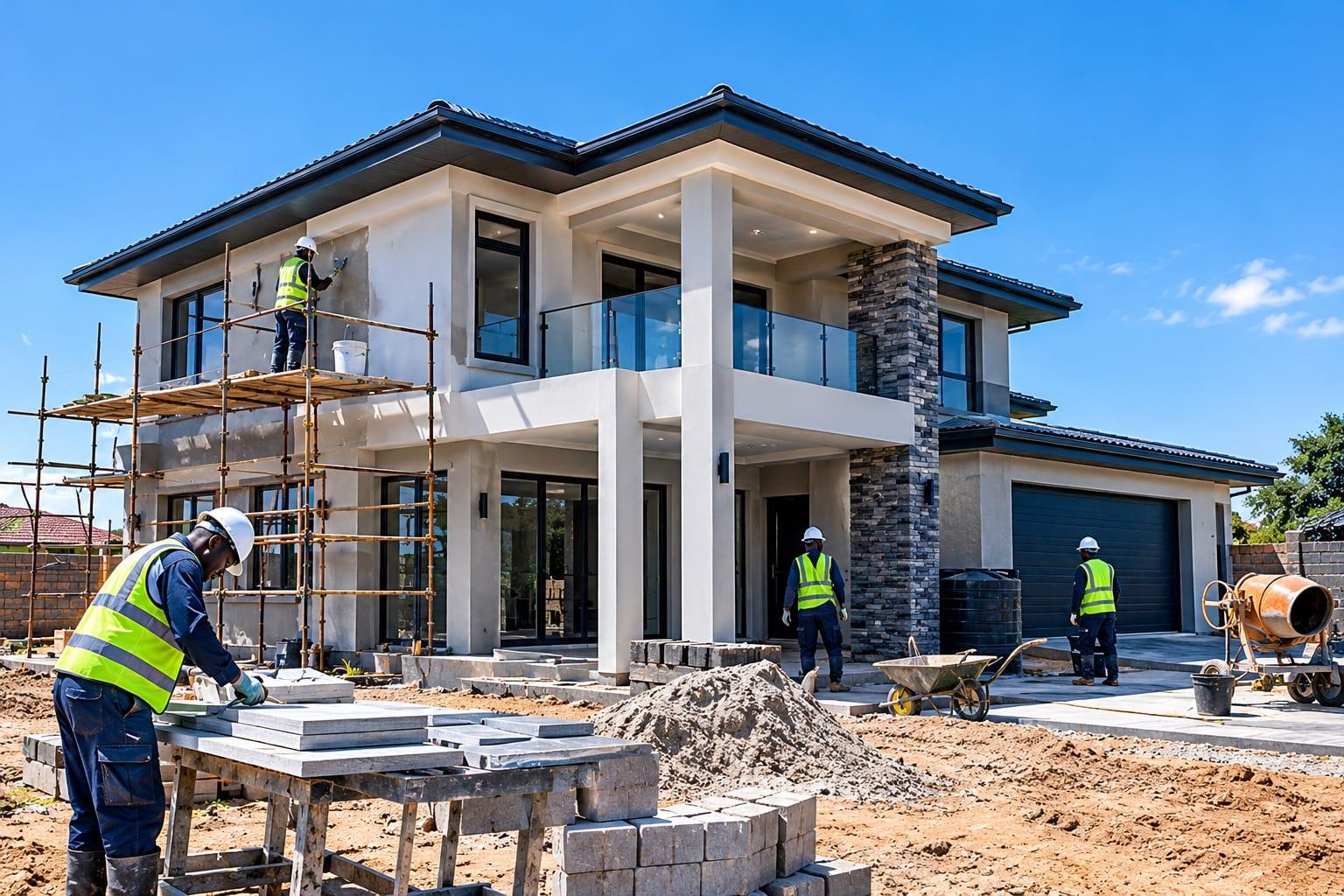
When a build back home goes wrong, it rarely goes wrong at the roof. It goes wrong at the start, with the choice of who would run it. Money sent for a foundation that was never poured, a quote that doubled halfway through, a builder who stopped answering: almost every story like that begins with someone chosen on a single recommendation and a handshake over WhatsApp.
From abroad, you can't drive past their last job or turn up on site unannounced. But you can check far more than most people do. Whether you're building in Harare, Nairobi, Lagos, Johannesburg or Accra, the steps below take a few evenings, and they are the cheapest protection a build will ever get.
Decide what you're actually hiring
Three arrangements cover most builds, and they need different people:
- A builder or contractor who brings the team, does the work and often buys the materials. One person to deal with, and one person carrying the risk.
- A project manager who doesn't lay bricks but hires and supervises the teams, buys materials and reports to you. Common when the owner is abroad, and worth what they cost if they keep a proper record.
- Your own builders on labour only, with you or family buying materials. Cheapest on paper, and the most work for whoever is on the ground.
Knowing which you want stops you comparing a labour-only price with a full-build price and choosing the cheaper one for the wrong reason.
Widen the net beyond one recommendation
A recommendation from someone you trust is still the best start. The mistake is stopping at one. Ask people who have built recently in the same area, not years ago and not across the country: rates, suppliers and good builders all change quickly. Look for anyone registered with the building industry body where your country has one. Online lists of builders and project managers, ours included, are a place to start, not a guarantee.
Aim to speak to three. With only one name, you're not choosing, you're hoping.
Check what you can check from far away
- That they are who they say. A working phone number in their own name, a full name, and where they're based. It sounds basic; it rules out more than you would think.
- Their work, with dates. Ask for photos of current and recent sites and the area each one is in. Better still, a video call walking around a site they're working on now.
- Two past clients, called directly. Not a message passed on by the builder. Ask whether it finished on budget, what went wrong, and whether they'd hire them again.
- How they handle receipts. Ask how they would show you what each payment bought. Someone who already photographs receipts the day they pay is someone who expects to be checked, and doesn't mind.
Get quotes you can actually compare
Most quotes can't be compared because each builder priced a slightly different house. Send every candidate the same description: the size, rooms, floors, finishes and the ground, ideally with the plan. Ask for a price per phase, not one lump sum: foundation, walls, roof, and so on. A lump sum hides where the money goes; a phase-by-phase price shows you.
Then compare each phase against what it should cost locally. If you don't know, our building cost guides give current rates by country, and an estimate of your own house gives you a range for every phase.
A quote well under the range is not a bargain. It usually means something is missing: materials, a phase, labour, or the money to finish. Ask what's left out before you choose it. A quote well over the range may include things the others left out, or may not. Ask that too.
The warning signs
- A large share of the money asked for before any work starts.
- No past clients you can speak to, or only ones they put on the line themselves.
- Reluctance to give receipts, or a promise to “send them all at the end”.
- A price far below everyone else's, with no clear reason.
- Pressure to decide quickly, or to send money to a personal account in a hurry.
- No video call from site, ever.
One of these can have an explanation. Two together is a reason to keep looking.
Start small, and pay by stage
Even after all this, treat the first phase as a trial. Pay for each stage as it's done, against photos and receipts, rather than far ahead of the work. Agree in writing what each phase includes, who buys materials and how you'll hear from site: our guide to what to agree with your project manager before the first transfer covers the eight things worth settling.
If the first stage goes well, you'll know far more about them than any recommendation could tell you. If it doesn't, you've found out at the cheapest possible moment.
How Trace My Build helps
We built service providers into Trace My Build for exactly this. It lists builders and project managers where you're building, with the builds they're already on in the app. We confirm their phone numbers and nothing more, so the checks above are still yours. You can ask a few for quotes from your own estimate, so every quote prices the same house phase by phase, and each one is set against local rates, with a quote far under the range flagged before you choose.
Whoever you choose joins your build: they log each payment with its receipt for you to approve, and send dated photos from site. No money goes through the app. Whatever you use, those are the checks worth making. And if you build or manage builds yourself, here's how owners can find you.